Quick Guide to Valve Open & Closed Status
Jul 23, 2026
Industrial Pipeline Safety Tips
Improper judgment of valve open/closed status remains a top cause of industrial pipeline failures, including medium leakage, water hammer impact, and system abnormal shutdowns. Even minor misoperation can lead to costly downtime and safety hazards.
For EPC teams, maintenance engineers and procurement specialists, mastering standard valve position identification is a basic but essential skill for stable pipeline operation.
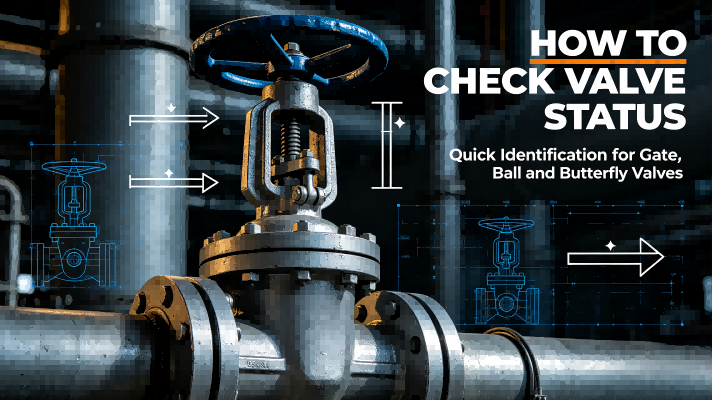
Rising-Stem Gate Valve (OS&Y)
Fully Open: Stem lifts to full stroke with obvious exposed threads
Fully Closed: Stem completely retracts into the valve bonnet
Note: For 6-inch stainless steel rising-stem gate valves, 125 PSI and 150 PSI only vary in pressure rating, with identical open/closed judgment criteria. Importantly, gate valves are designed for full open or full closed service only — partial opening for throttling will severely damage sealing surfaces and shorten service life.
Ball Valve
Fully Open: Lever parallel to pipe flow direction
Fully Closed: Lever perpendicular to pipe flow direction
Butterfly & Globe Valve
Confirm the actual status through gearbox scales, actuator position indicators and factory body markings.
Key Reminder
Never trust remote system signals entirely. Common issues like actuator decoupling and sensor failure often result in inaccurate data. On-site physical verification is always required for safety validation.
Standardized valve inspection and correct status identification minimize operational risks, reduce maintenance costs, and maximize the service life of industrial piping systems.




 Network Supported


