Detailed Explanation of 5 Types of Manual Diaphragm Valves
May 15, 2026
In industrial pipeline systems, diaphragm valves have become the preferred choice for transporting corrosive, viscous, and particle-containing media, thanks to their core advantage of complete isolation between the medium and the driving components. Manual diaphragm valves are easy to operate and feature strong sealing performance, making them suitable for a variety of working conditions. However, different models vary significantly in structure, connection method, and applicable scenarios. Choosing the wrong model will not only affect pipeline efficiency but also lead to potential hazards such as valve damage and medium leakage.
Today, we will fully break down 5 commonly used manual diaphragm valves — EG41J-10Q, G41J-10Q, G46J-10Q, EG11W-10Q, and EG16W-10Q. From structural differences and selection tips to a comparison of lining rubber materials, we will explain everything in one go to help you accurately match your working condition requirements and avoid selection mistakes!
I. First Understand the Core: Key Differences Between 5 Types of Manual Diaphragm Valves (Easy to Distinguish at a Glance)
All 5 of these diaphragm valves are manually operated with a nominal pressure of 1.0MPa (10Q). Their core differences lie in three dimensions: connection method, structural form, and execution standard, which directly determine their applicable scenarios. Below is a detailed breakdown of each, presented in a simple and straightforward manner.
1. EG41J-10Q Manual British Standard Weir-Type Diaphragm Valve
Core Positioning: British Standard, suitable for foreign/international projects, weir-type structure focusing on tight sealing
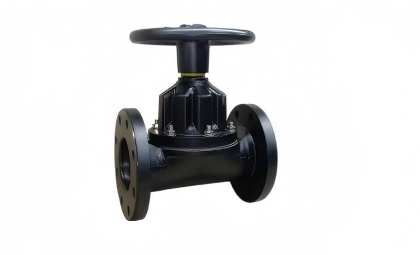
Structural Features: Designed and manufactured in accordance with British Standards (BS Standards), it adopts flange connection (the number 4 denotes flange connection) and a weir-type structure (the number 1 denotes weir-type). There is a raised diversion weir inside the valve body, which serves as the valve seat. The diaphragm is pressed down to fit the weir surface, achieving a tight seal. It has a short stroke, which reduces diaphragm stress and extends its service life. Additionally, it has no dead corners for medium accumulation and possesses certain throttling characteristics.
Key Advantages: Complies with BS/EN/ISO international standards, with flange sizes and pressure ratings that seamlessly integrate with international pipeline systems. It offers excellent sealing performance, strong corrosion resistance, and robust resistance to particle-containing media. It can also be used in vacuum conditions (special enhanced diaphragms are available for high-vacuum applications).
Applicable Scenarios: Foreign projects, supporting pipelines for British Commonwealth and European standards, such as the transportation of corrosive media in the chemical, environmental protection, and pharmaceutical industries. It is particularly suitable for scenarios with high sealing requirements and the need for compatibility with international equipment.
2. G41J-10Q Manual National Standard Weir-Type Diaphragm Valve
Core Positioning: National Standard, widely used in China, cost-effective choice for weir-type structures
Structural Features: Designed in accordance with national standards such as GB/T 12239 (the letter G denotes national standard), it uses flange connection (4) and a weir-type structure (1). It shares the same structural principle as the EG41J-10Q, with both achieving sealing by pressing the diaphragm against the weir surface. However, its execution standard, flange size, and structural length comply with national standards, making it more suitable for domestic pipeline systems.
Key Advantages: Boasts a mature domestic supply chain, offering high cost-effectiveness, convenient installation and maintenance, and reliable sealing performance. It features no stuffing box design, eliminating the risk of stuffing leakage, and the valve stem is not corroded by the medium, making it suitable for most domestic industrial working conditions.
Applicable Scenarios: Domestic chemical, metallurgical, municipal water supply and drainage, and sewage treatment industries. It is used to control corrosive and viscous media, particularly suitable for conventional working conditions and projects with a moderate budget. It is one of the most widely used weir-type diaphragm valves in China.
3. G46J-10Q Manual Straight-Through Diaphragm Valve
Core Positioning: National Standard Straight-Through, Prioritizes Large Flow, Enables Unobstructed Transportation
Structural Features: Designed to national standards (G), it uses flange connection (4) and a straight-through structure (the number 6 denotes straight-through). The valve body has a straight internal flow channel, allowing the medium to flow in a straight line without a diversion weir. When the diaphragm is fully lifted, the medium flow resistance is extremely low, and the flow rate is higher than that of weir-type valves. It also adopts a diaphragm isolation design to separate the medium from the driving components, preventing internal and external leakage.
Key Advantages: Offers strong flow capacity and low pressure loss, making it suitable for large-flow medium transportation. Its simple structure prevents clogging, making it ideal for media containing minor particles, and it has low maintenance costs. The diaphragm is a wearing part that can be replaced regularly according to working conditions.
Applicable Scenarios: Domestic large-flow pipeline systems, such as chemical raw material transportation, large-diameter pipelines in sewage treatment plants, and mine sewage discharge. It is particularly suitable for working conditions with low medium viscosity, high flow requirements, and a small amount of impurities.
4. EG11W-10Q Manual Weir-Type Threaded Diaphragm Valve
Core Positioning: British Standard Threaded, Specialized for Small Diameters, Flexible Installation
Structural Features: Complies with British Standards (EG), uses threaded connection (the number 1 denotes threaded connection), and has a weir-type structure (1). It is a small-diameter diaphragm valve (usually DN≤50), also known as a threaded diaphragm valve. It connects to the pipeline via internal threads, featuring a small volume and light weight. The weir-type structure ensures tight sealing, and the medium only comes into contact with the valve body and diaphragm, eliminating the risk of valve stem corrosion.
Key Advantages: Requires no flange for installation, making it suitable for small-diameter pipelines and saving space. Its British Standard compliance allows it to adapt to small foreign equipment, and it offers good sealing performance, easy operation, and suitability for installation in narrow spaces.
Applicable Scenarios: Small equipment pipelines, laboratory pipelines, and instrument supporting pipelines, such as the transportation of corrosive media in pharmaceutical laboratories, small chemical equipment, and precision instruments. It is suitable for scenarios with small flow, small diameter, and limited installation space.
5. EG16W-10Q Manual Straight-Through Threaded Diaphragm Valve
Core Positioning: British Standard Threaded, Small Diameter + Large Flow, Flexible Adaptation
Structural Features: Complies with British Standards (EG), uses threaded connection (1), and has a straight-through structure (6). It is designed for small diameters (DN≤50), with threaded connection enabling convenient installation. The straight-through flow channel reduces medium resistance, and its flow rate is higher than that of weir-type threaded diaphragm valves of the same diameter. The diaphragm isolation design prevents medium leakage, making it suitable for large-flow requirements in small-diameter pipelines.
Key Advantages: Combines the installation flexibility of small diameters with the large-flow characteristics of straight-through structures. Its British Standard compliance makes it suitable for small foreign equipment, and it has no clogging risk, simple operation, and convenient maintenance. It is ideal for scenarios requiring large flow in small-diameter pipelines.
Applicable Scenarios: Small foreign equipment, precision instrument pipelines, and small chemical pipelines, such as large-flow reagent transportation in laboratories and small corrosive medium circulation pipelines. It is suitable for small spaces with certain flow requirements.
II. Selection Tips: How to Choose the 5 Types of Valves? Match Directly According to Working Conditions
Core Selection Logic: First check the execution standard (domestic/foreign) → then select the connection method (flange/thread) → finally choose the structural form (weir-type/straight-through). Combine this with working condition parameters such as flow rate, diameter, and medium characteristics to achieve accurate matching and avoid wrong selections.
1. Selection by Execution Standard
Domestic projects without international standard requirements: Prioritize G41J-10Q (weir-type flange) and G46J-10Q (straight-through flange), which are suitable for domestic pipelines, cost-effective, and easy to maintain.
Foreign projects and British Standard/international standard supporting: Prioritize EG41J-10Q (weir-type flange), EG11W-10Q (weir-type threaded), and EG16W-10Q (straight-through threaded) to ensure seamless connection with international equipment and pipelines.
2. Selection by Connection Method
Large-diameter pipelines (DN≥50) requiring stable connection: Choose flange connection (EG41J-10Q, G41J-10Q, G46J-10Q) for secure installation and suitability for industrial large-flow working conditions.
Small-diameter pipelines (DN≤50) with limited installation space: Choose threaded connection (EG11W-10Q, EG16W-10Q) — no flange required, offering flexible installation and suitability for small equipment and laboratory scenarios.
3. Selection by Structural Form (Flow/Sealing)
High sealing requirements and need for throttling control: Choose weir-type structures (EG41J-10Q, G41J-10Q, EG11W-10Q) for tight sealing, no medium accumulation, precise throttling, and suitability for working conditions with strict leakage requirements.
High flow requirements, medium without impurities or containing a small amount of particles: Choose straight-through structures (G46J-10Q, EG16W-10Q) for low flow resistance, large flow rate, no clogging risk, and suitability for large-flow transportation scenarios.
4. Selection Quick Reference Table (Direct Comparison)
Valve Model
Execution Standard
Connection Method
Structural Form
Core Applicable Scenarios
EG41J-10Q
British Standard
Flange
Weir-Type
Foreign projects, high sealing requirements, large-diameter pipelines with flange connection
G41J-10Q
National Standard
Flange
Weir-Type
Domestic conventional working conditions, high sealing requirements, large-diameter pipelines with flange connection
G46J-10Q
National Standard
Flange
Straight-Through
Domestic large-flow, large-diameter pipelines with flange connection, media containing a small amount of particles
EG11W-10Q
British Standard
Threaded
Weir-Type
Foreign small equipment, small-diameter pipelines, high sealing requirements
EG16W-10Q
British Standard
Threaded
Straight-Through
Foreign small equipment, small-diameter pipelines, large flow demand
III. Detailed Explanation of Lining Rubber Materials: Different Lining Rubbers Adapt to Different Media, Choose the Right One for Durability
The lining rubber (including the diaphragm material) of a diaphragm valve directly determines its corrosion resistance, temperature resistance, and service life. The core lining rubber materials include EPDM (Ethylene Propylene Diene Monomer), NR (Natural Rubber), Butyl Rubber, Hard Rubber, and Fluorine Rubber. Each material has distinct characteristics and must be selected accurately based on the medium type and temperature conditions to avoid valve failure caused by lining rubber aging or damage.
1. EPDM (Ethylene Propylene Diene Monomer) — Cost-Effective Choice for High-Temperature and Strong Alkali
Core Characteristics: Extremely strong alkali resistance, capable of withstanding ≤40% NaOH (stable at 120℃), with a temperature resistance range of -50℃~150℃ (short-term resistance to 180℃ steam). It offers excellent aging resistance, ozone resistance, and steam resistance, and is not prone to cracking when used outdoors for long periods. It has good tolerance to water, hot water, weak acids, and alcohols. However, it has extremely poor oil resistance and organic solvent resistance, and will swell and fail quickly upon contact with oil.
Applicable Media: Water, steam, high-temperature strong alkali, weak acid (≤50% H₂SO₄), sewage, circulating water, etc.
Applicable Valves: Suitable for all 5 models, particularly ideal for working conditions such as municipal water supply and drainage, printing and dyeing, and chemical high-temperature alkali washing. It is one of the most widely used lining rubber materials.
2. NR (Natural Rubber) — Cost-Effective Option for Normal Temperature and Low Pressure
Core Characteristics: Offers optimal elasticity and good low-temperature toughness, with simple processing and molding and the lowest cost. However, it has a low upper temperature limit (long-term use ≤60℃), weak aging resistance and weather resistance, and is not resistant to strong acids, concentrated alkalis, oxidants, or oils. It tends to harden and crack when exposed to outdoor sunlight and has high gas permeability.
Applicable Media: Normal temperature dilute alkali (≤10% NaOH), fresh water, sewage, and low-pressure media without oil or strong corrosion.
Applicable Valves: Suitable for scenarios with budget sensitivity and mild working conditions, such as civil low-pressure water supply and drainage and ordinary heating and ventilation pipelines. It can be used for national standard natural-color valves such as G41J-10Q and G46J-10Q.
3. Butyl Rubber (IIR) — First Choice for Strong Acid and High Air Tightness
Core Characteristics: Provides optimal strong acid resistance, capable of withstanding 70% H₂SO₄ and 30% HCl (stable at normal temperature), and alkali resistance up to ≤20% NaOH (normal temperature). It offers excellent air tightness (gas permeability is 1/20 that of NR), good aging resistance, and a long service life (8-10 years). However, it is not resistant to oils and aromatics, its performance degrades under high-temperature and strong alkali conditions (>80℃), and it has average elasticity.
Applicable Media: Strong acid media such as hydrochloric acid and phosphoric acid, gas media, and normal temperature strong acid slurries (e.g., desulfurization tower slurry).
Applicable Valves: Weir-type valves such as EG41J-10Q and G41J-10Q, particularly suitable for strong acid working conditions in the chemical and desulfurization industries.
4. Hard Rubber — General-Purpose for Conventional Corrosion Conditions
Core Characteristics: Features high hardness and good wear resistance, with resistance to corrosion by general weak acids, weak alkalis, and salt solutions. It has a moderate cost, stable mechanical strength, and is not easily deformed. However, it has average temperature resistance (long-term use ≤80℃), poor performance under strong corrosion and high-temperature conditions, and insufficient elasticity.
Applicable Media: Conventional corrosive media, salt solutions, and chemical raw materials without strong corrosive components.
Applicable Valves: Suitable for all 5 models, ideal for conventional corrosion working conditions and projects with a moderate budget and no high requirements for temperature resistance or strong corrosion resistance.
5. Fluorine Rubber (FKM) — Top Choice for Extreme Strong Corrosion Conditions
Core Characteristics: Offers all-round strong corrosion resistance, capable of withstanding the full pH range of 1-14, and remains stable in 98% concentrated sulfuric acid, concentrated hydrochloric acid, high-temperature strong alkali, solvents, and oils. It has a temperature resistance range of -20℃~220℃ (short-term resistance to 250℃), optimal aging resistance and steam resistance, and a long service life (10-15 years). However, it is expensive (approximately 200-500 yuan/kg), has poor elasticity, and requires high processing standards.
Applicable Media: Strong oxidants, concentrated strong acids, concentrated strong alkalis, mixed solvent media, and high-temperature oil media.
Applicable Valves: Suitable for high-end industries such as fine chemicals, pharmaceuticals, and semiconductors, such as EG41J-10Q for high-end foreign projects and EG11W-10Q/EG16W-10Q for supporting precision instruments, used in extremely harsh working conditions.
Quick Memory for Lining Rubber Selection (Avoid Mistakes)
Low budget, normal temperature dilute acid/alkali/water media → Choose NR
High-temperature strong alkali, steam working conditions → Choose EPDM
Normal temperature strong acid, high air tightness requirements → Choose Butyl Rubber
Conventional corrosion, moderate budget → Choose Hard Rubber
Extreme strong corrosion, high temperature, mixed solvents → Choose Fluorine Rubber (no need to worry about cost)
IV. Summary: 5 Types of Valves + Lining Rubber, No More Selection Mistakes
The core of manual diaphragm valve selection is "matching working conditions": for domestic conventional working conditions, prioritize national standard flange models (G41J-10Q, G46J-10Q); for foreign projects, choose British standard models (EG series); select threads for small diameters and flanges for large diameters; opt for weir-type for sealing and throttling, and straight-through for large flow.
Lining rubber material is the "key to durability". It should be selected based on medium corrosion, temperature, and budget — there is no need to pursue the "most expensive" option; suitability is the best. EPDM/hard rubber is sufficient for conventional working conditions, directly choose fluorine rubber for extreme conditions, butyl rubber for strong acids, and NR for normal temperature and low pressure.
We can customize exclusive lining rubber and valve models according to your specific working conditions (medium type, temperature, pressure, diameter, execution standard), providing full-process selection guidance and after-sales support to ensure each diaphragm valve operates stably and reduces operation and maintenance costs!
If you have specific working condition requirements, please leave a message, and we will help you accurately match the valve + lining rubber combination!




 Network Supported


